What Is L*a*b*? — A Color Space for Communicating Color with Numbers
PaPaLaB Color
Measurement
Color strongly influences how we perceive products and designs, and it can also have a significant impact on product quality. However, color perception is subjective and can vary depending on lighting conditions and the observer.
To reduce this ambiguity and manage and reproduce color accurately, standardized color spaces and color measurement systems are used. Among them, the CIELAB color space, commonly called Lab, is widely used for color difference evaluation and quality control.
This page explains how color can be represented numerically and why Lab is considered a reliable and useful color space.
Contents
What Is a Color Space? — A Method for Representing Color Numerically
A color space is a system for representing colors with numerical values.
Although color is something we perceive visually, in quality control and product development it is necessary to convert color into objective numerical data that can be interpreted using a common standard. In this sense, a color space can be thought of as a common language for color.
Some commonly used color spaces include:
RGB:
A color space based on additive color mixing using red, green, and blue light. It is widely used for displays, cameras, and digital image processing.
XYZ:
A color space defined by the CIE (International Commission on Illumination) based on human visual response. It serves as the foundation for many color measurement and color conversion systems.
Lab was designed so that numerical differences between colors more closely reflect differences perceived by the human eye.
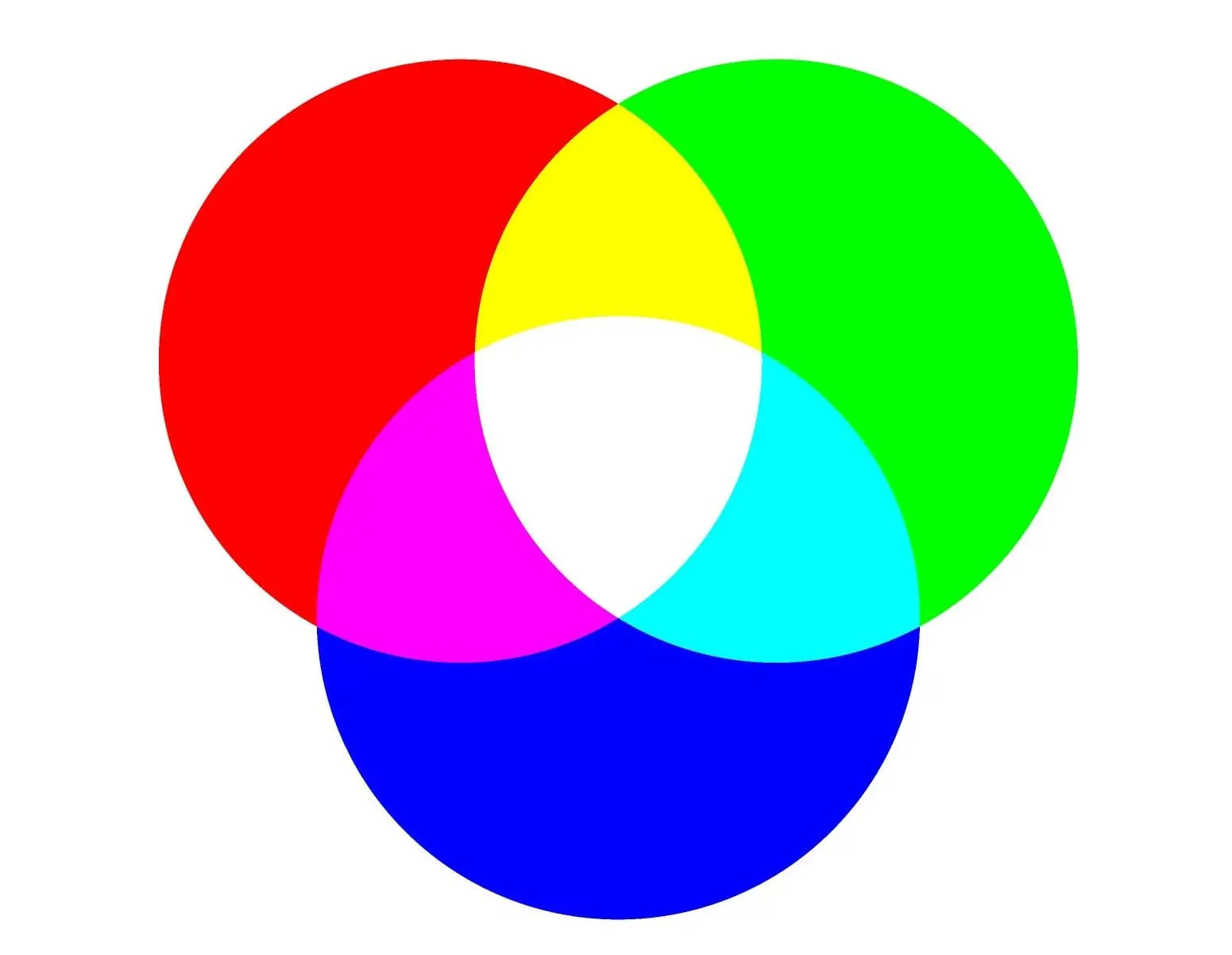
RGB Additive Color Mixing: Red, Green, and Blue Light Combine to Create White
How Lab Works — Representing Color with Three Axes
CIELAB, commonly referred to as L*a*b*, is a color space derived from the CIE XYZ color space and designed so that numerical color differences more closely correspond to perceived visual differences.
It consists of three axes:
L* (Lightness):
Represents lightness. A value of 0 represents black, while 100 represents white.
a*:
Represents the red–green axis. Positive values indicate red, while negative values indicate green.
b*:
Represents the yellow–blue axis. Positive values indicate yellow, while negative values indicate blue.
With this three-dimensional structure, differences between colors can be quantified using color difference values such as ΔE. This provides an objective way to evaluate color differences in a manner that broadly corresponds to human visual perception.
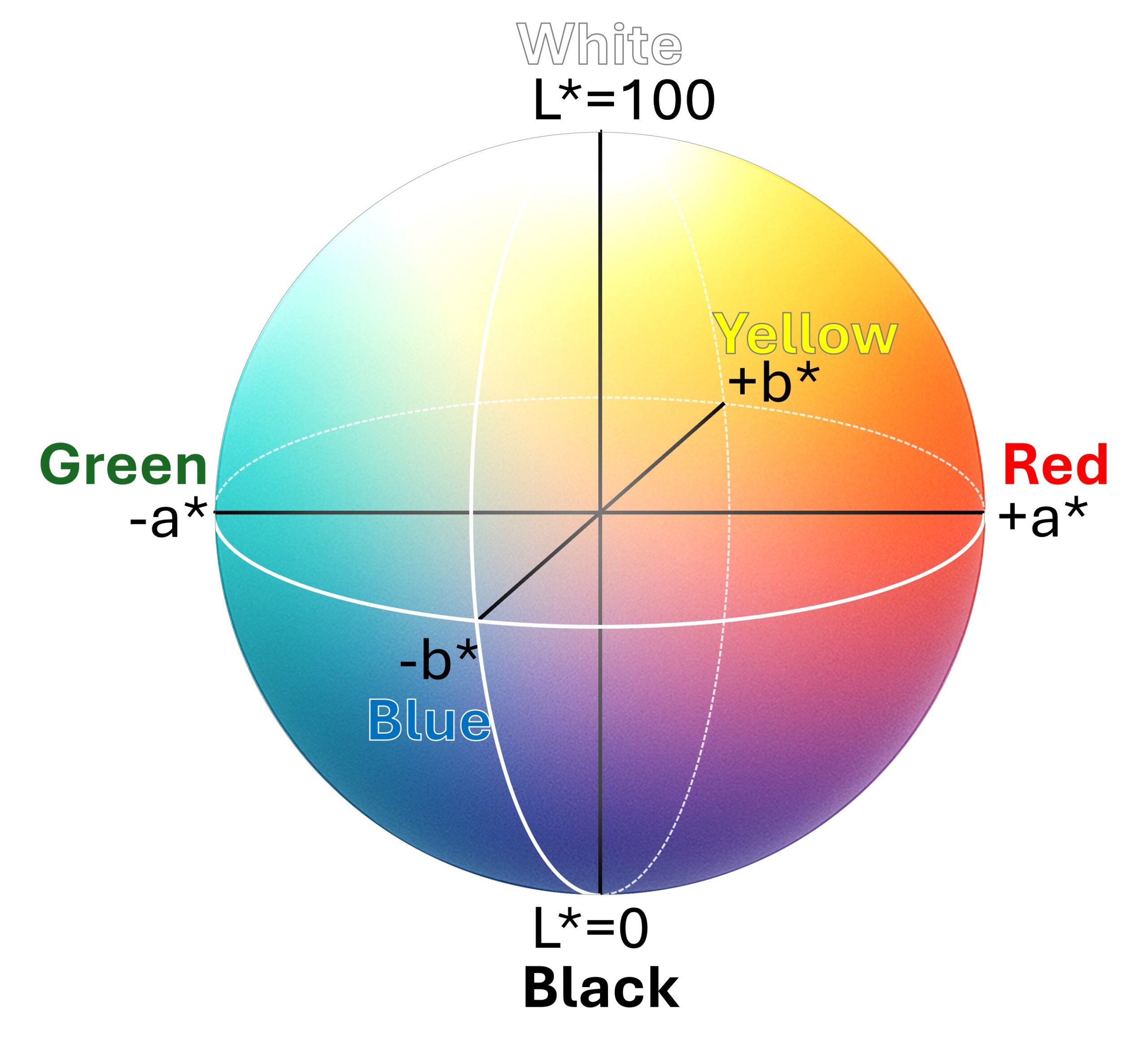
L*a*b* Color Space: Accurately Quantifying Color Appearance and Differences
Why Is L*a*b* Widely Used? — A Common Standard for Color
Because the Lab color space enables color differences to be expressed numerically in a way that is closely related to human visual perception, it is widely used for quantitative color evaluation and quality control.
Several factors contribute to the widespread use of L*a*b*:
– It was defined by the CIE (International Commission on Illumination) and is referenced in international and national standards, including ISO and JIS standards.
– It provides a practical way to quantify color differences.
– L*a*b* values are supported by many colorimeters, spectrophotometers, and color management software applications.
– When standardized measurement conditions, such as a standard illuminant and standard observer, are used, colors can be compared consistently across different products and materials.
Controlling measurement conditions is particularly important. Under standardized conditions, Lab values provide consistent and comparable color data.
However, surface properties such as gloss, texture, and material characteristics can still influence measured and perceived color, so these factors should also be considered when establishing measurement conditions.
For these reasons, L*a*b* is widely used in industries where color appearance directly affects product quality and brand image, including printing, paints and coatings, textiles, cosmetics, food products, and building materials.
Various color systems and color spaces, such as RGB, XYZ, and the Munsell system, are used depending on the application. Among them, L*a*b* serves as an important common framework for objectively communicating differences in color appearance and is widely used as a basis for quality evaluation and decision-making.
Why Use L*a*b*? — A Common Language for Color
By representing color with a common set of numerical values, it becomes easier to reduce ambiguity and prevent misunderstandings among customers, suppliers, and other stakeholders.
For example, L*a*b* values can be used to determine whether a product has been produced in the intended color or whether the colors of different components match within specified tolerances. This allows everyone involved to evaluate color using the same criteria.
PaPaLaB provides measurement and analysis software that supports multiple color spaces, including Lab, RGB, and XYZ.
Among these, we recommend Lab for color management and inspection because it is well suited to evaluating differences in color appearance and is widely used in quality control.
Establishing a system that enables consistent color measurement and evaluation based on common criteria is an important first step toward maintaining consistent product quality, strengthening brand reliability, and achieving effective global color management.
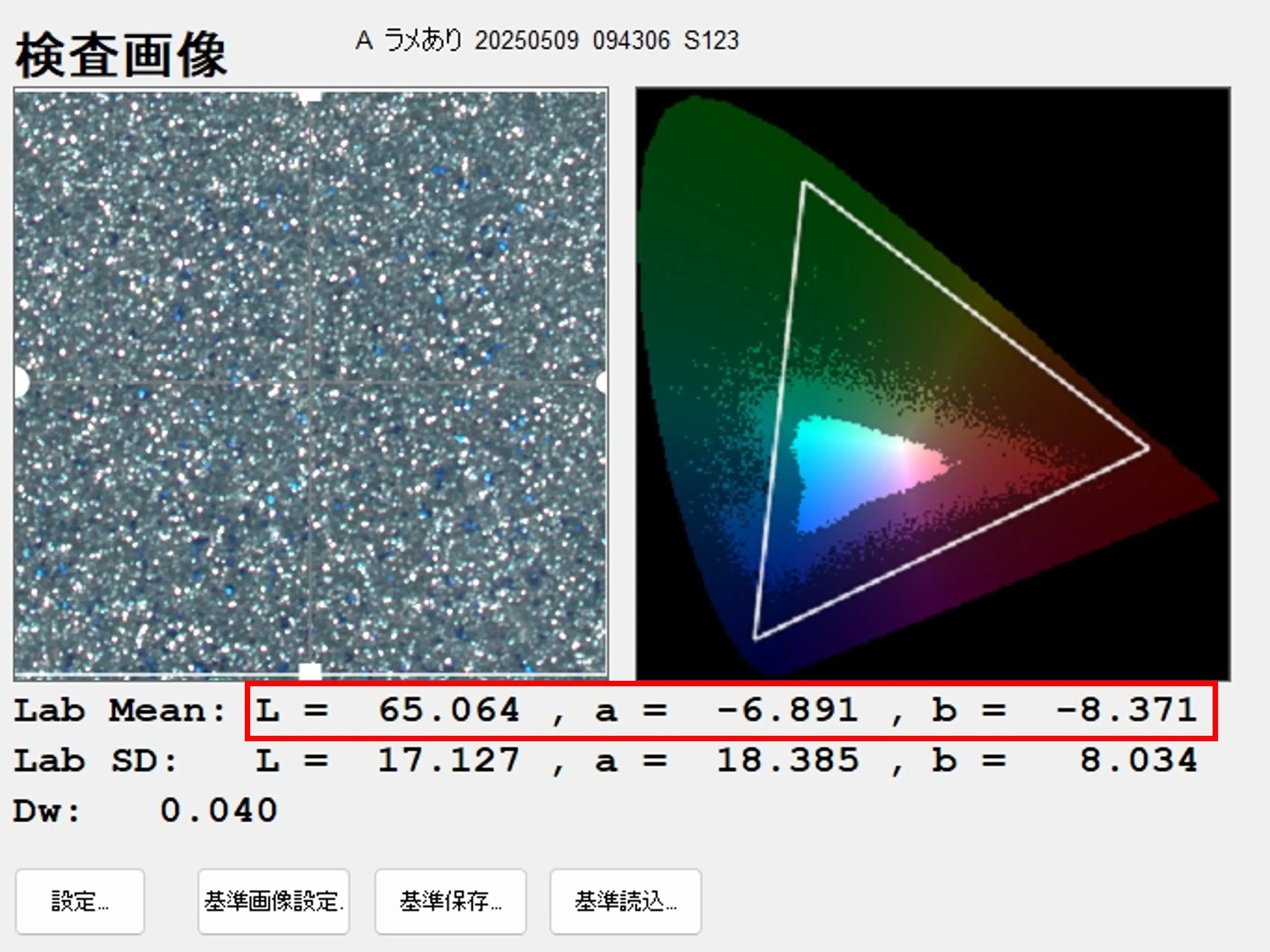
Measurement Screen (Partial View): Average L*a*b* Values Are Calculated from the Inspection Image
Summary
The L*a*b* color space provides a practical way to represent color numerically and objectively. When used with color difference metrics such as ΔE, it enables differences in color appearance to be quantified for objective quality control and technical evaluation.
PaPaLaB supports the development of precise color management systems through both measurement instruments and software, including solutions for evaluating color differences using ΔE.
Creating an environment in which color can be evaluated consistently and without ambiguity contributes directly to product quality, brand consistency, and customer confidence.
Contact
Please feel free to contact us with any inquiries regarding our products, pricing, or quotations.
We also accommodate requests such as “I would like to see how measurement works in practice.”
Trial measurements are available, allowing you to experience actual measurement results firsthand.