Color Measurement of Hair and Fiber Bundles

This case study explains the challenges involved in measuring the color of hair and fiber bundles and presents a method for achieving stable, reliable evaluation.
Overview
Hair and fiber bundles are made up of many fine strands, with small gaps between them. Because they do not form a uniform surface, their appearance and perceived color can vary depending on the measurement conditions and viewing environment. In particular, differences in fiber density and alignment affect how light is reflected and transmitted, making measurements highly susceptible to the influence of the background. As a result, hair and fiber bundles are widely regarded as difficult materials to evaluate consistently for color, and conventional methods have made quantitative color control challenging.
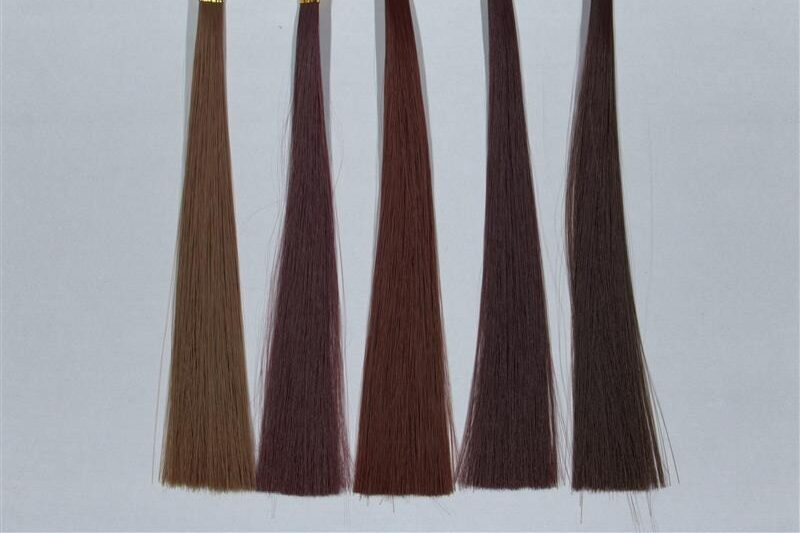
Color samples of hair bundles
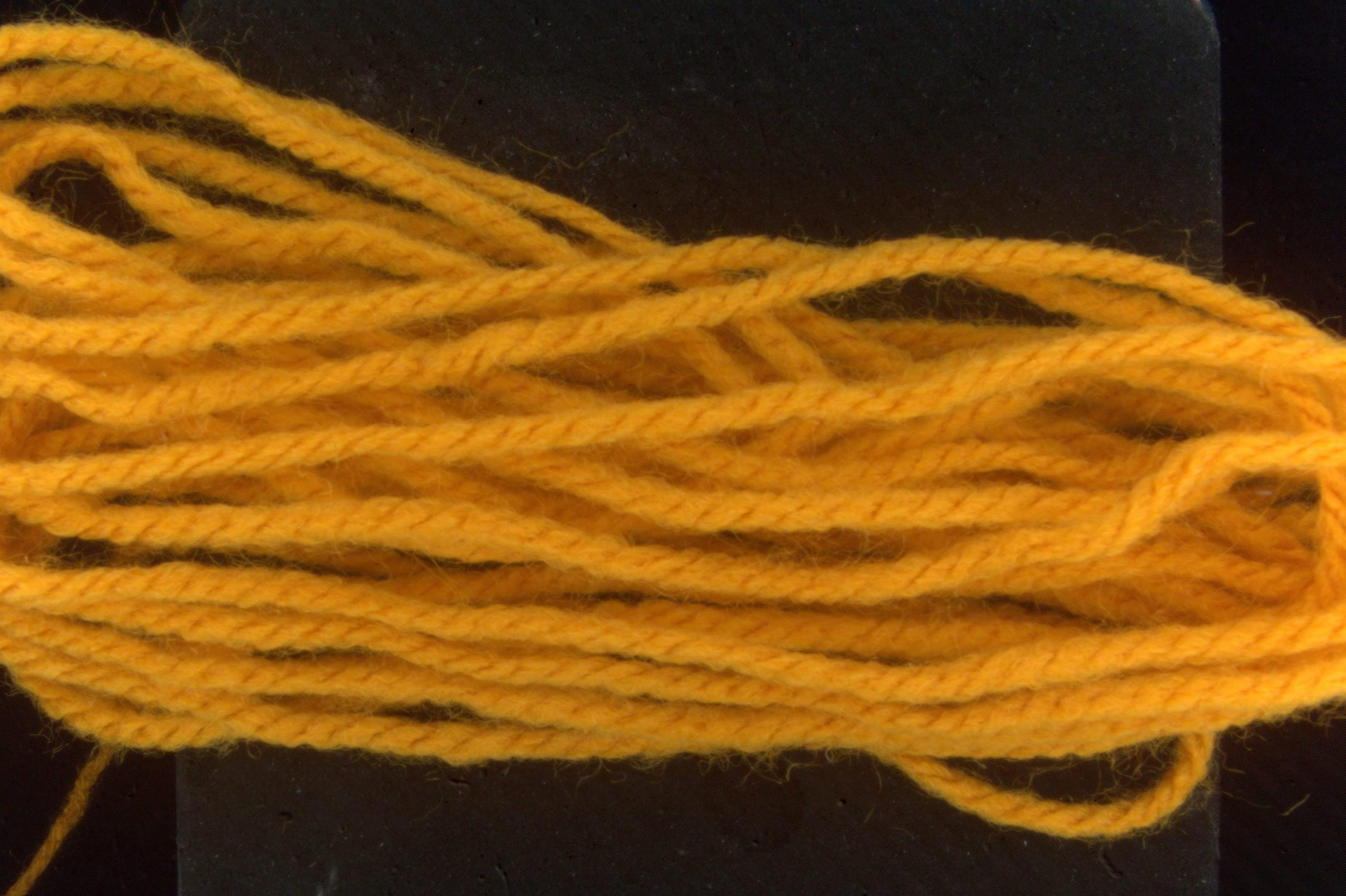
Photograph of a yarn bundle
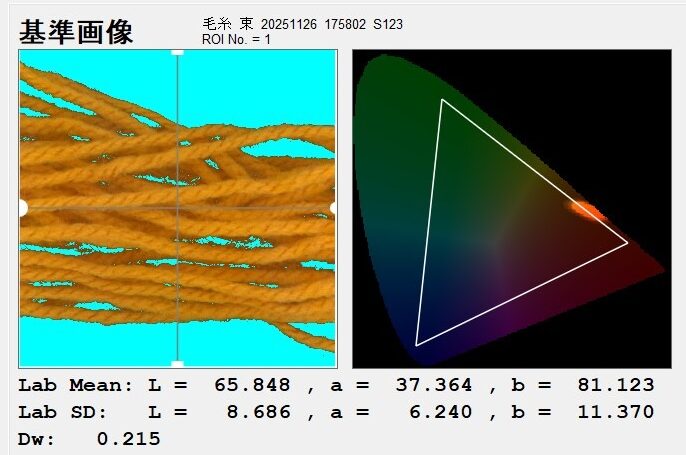
Measurement screen (masking function)
Customer Challenges
Challenges
Challenges in Measuring the Color of Fibers and Hair | Errors Caused by Gaps and Difficulties in Quantification
With conventional spot colorimeters, the measurement light can pass through gaps in the bundle and pick up the color of the background, producing values that do not accurately represent the actual fiber color. Results can also vary depending on the measurement position and the pressure applied to the sample, making consistent measurement difficult. Consequently, color evaluation has often relied on visual inspection or comparison with reference samples, leaving judgments dependent on the perception and experience of individual operators.
Benefits After Implementation
Quantifying Fiber and Hair Color to Improve Repeatability
Our camera-based colorimeter captures the measurement target as an area rather than a single point and analyzes the entire image, allowing the color of a hair or fiber bundle to be evaluated in a way that more closely reflects its actual appearance. Our proprietary image-processing technology automatically excludes gaps and background areas that are irrelevant to color measurement, isolating only the fiber regions for evaluation. This enables highly accurate quantification of bundle color and consistent color control without relying on subjective judgment.
Measurement Methods
1. Set the reference: Capture and save an image of the reference sample. This only needs to be done once. Click “Add Reference” to complete the setup.
2. Inspect the sample: Capture an image of the sample to be inspected. The system is now ready for measurement.
3. View the results: Open the Measurement tab to display the inspection results. Both the results and the captured images can be exported.
Analysis Image
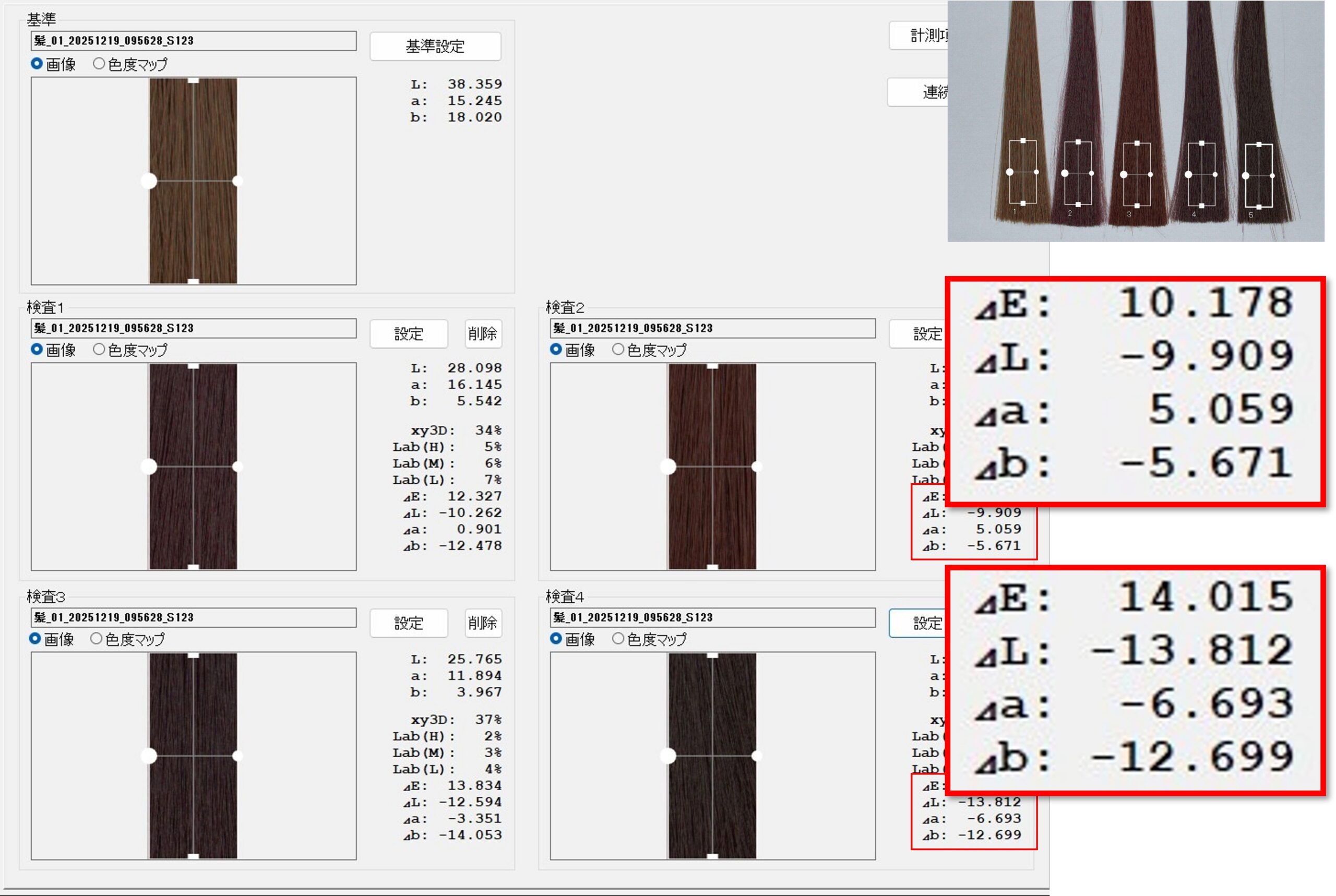
Set one hair-bundle sample as the reference and compare it with multiple test samples to quantitatively evaluate color differences. This analysis shows not only the magnitude of each difference, but also the direction of the color shift, including changes in redness, yellowness, and lightness. This makes it possible to explain how samples differ using numerical data rather than subjective impressions, helping clarify pass/fail criteria and improve the accuracy of adjustment instructions. It is also useful for building a shared understanding among production teams, development teams, and business partners.
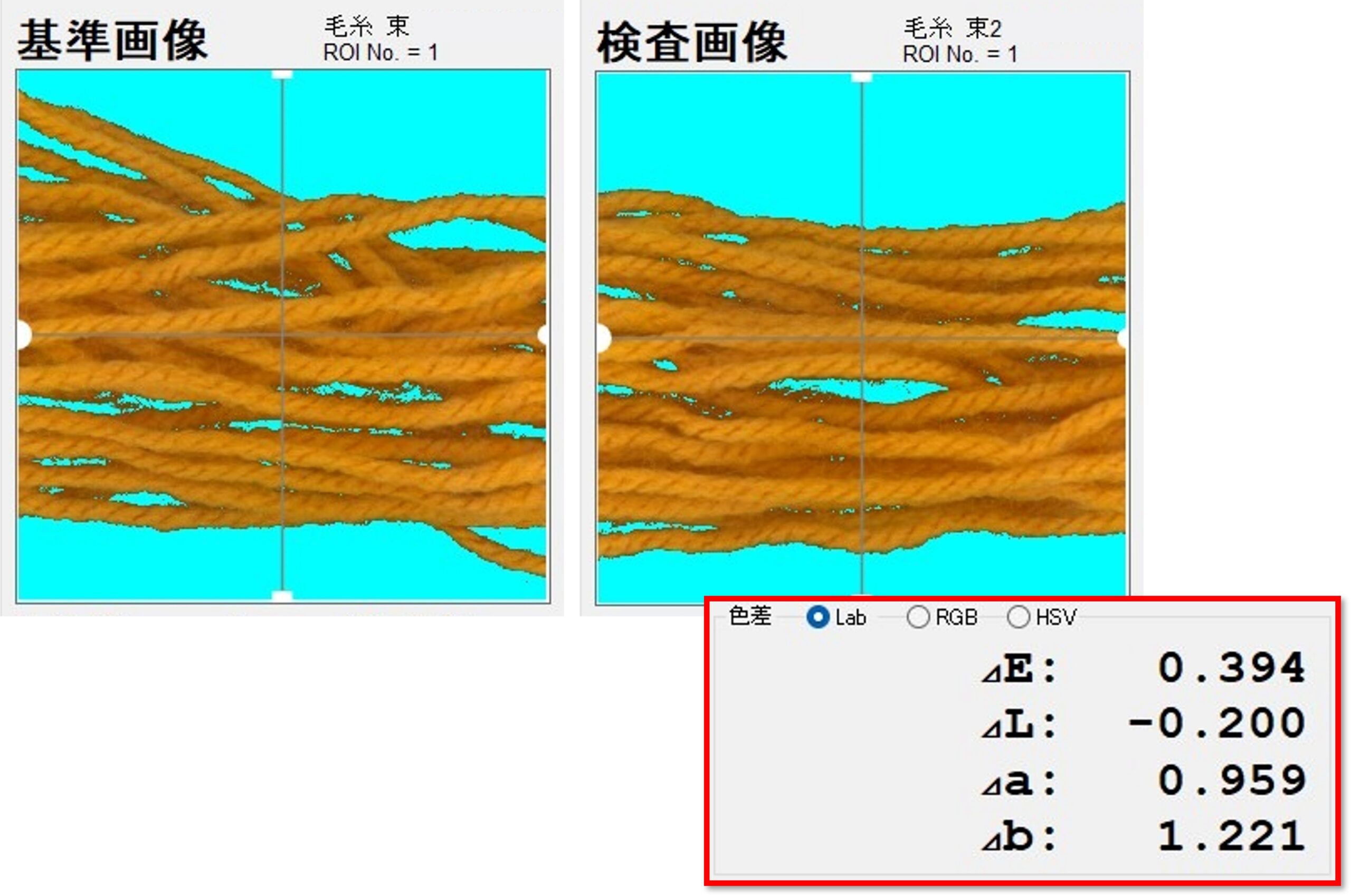
Measure and compare hair-bundle samples from multiple lots under identical conditions to visualize color variation and assess quality consistency. Subtle differences that were previously judged by appearance or experience can be clearly quantified, making it possible to establish tolerance ranges and detect abnormalities at an early stage. This improves the accuracy of quality control, helps prevent nonconforming products from reaching customers, and supports process improvement. The analysis provides an effective benchmark for maintaining a stable supply of consistently manufactured products.
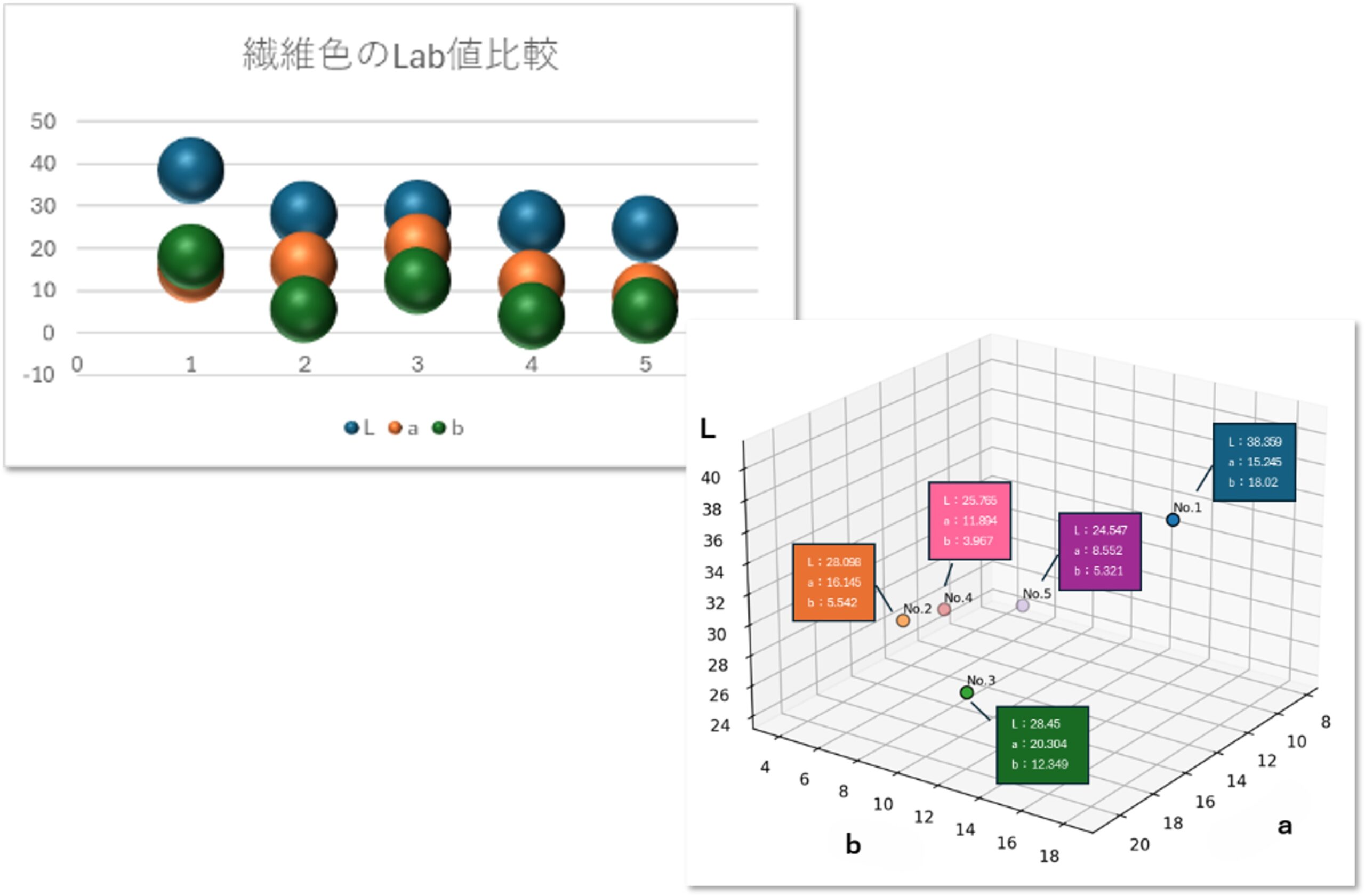
Quantitatively comparing and analyzing changes in hair-bundle color caused by different dye formulations or processing conditions helps optimize the dyeing process. Measuring the degree and direction of color change under each condition makes it possible to identify which factors affect the target color. This improves the efficiency of prototyping and validation, shortens development lead times, and enables highly repeatable processing conditions to be established. It also supports more effective use of data in research and development.
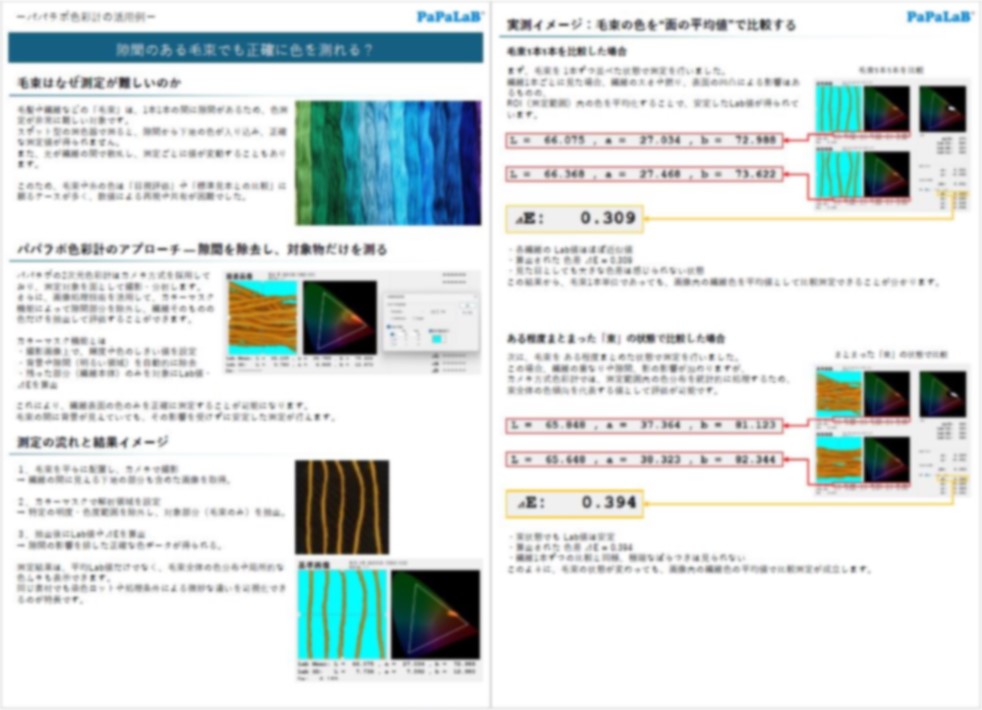
Would you like to see more detailed measurement results?
We offer a free white paper that summarizes the measurement methods, analysis conditions, and key evaluation points used in this case study. It can serve as a useful reference when considering implementation or conducting comparative evaluations.
To request the white paper, please enter the following message in the “Inquiry Details” field of the contact form:
“I would like to receive the white paper on color changes in metals caused by oxidation.”
Then submit your inquiry.
Contact
Please feel free to contact us with any inquiries regarding our products, pricing, or quotations.
We also accommodate requests such as “I would like to see how measurement works in practice.”
Trial measurements are available, allowing you to experience actual measurement results firsthand.